Ice Cream- what's your flavour?

Everything is so complicated and overwrought right now but a recent Reddit post asking, “What is an ice cream flavour that is unique to your hometown?” captured my attention, reminding me that the site is home to some pretty decent food discourse—perhaps because of its anonymity and lack of earnestness. Many of the replies are truncated to the nth degree, offering only the name of the ice cream, with no explanation as to its nature or geographical origin. I don't mind that, being an elderly Gen Xer who grew up without the Internet who was told on a daily basis To Go Look It Up In The Library - ergo, I do not need spoonfeeding. And it is fair to assume most of the ice creams mentioned are US based, though there is a smattering from elsewhere: i.e. discovered on holiday, or tied to cultural or ancestral memory, and a substantial amount turn out not to be unique to a specific place at all; multiple replies from people across different states saying they too buy/bought this at their local parlour/store prove that. The few responses that offer context generate even more questions on my part. Eventually, I call it quits; there are 87 open tabs on my laptop.
I adore ice cream. I suspect it might be my desert island food—if my shipwrecked existence were not complicated by a weird form of diabetes known as LADA where I get to be T1 and T2 (how greedy of me, my friend said when I told her), a condition that has severely curtailed my consumption in tandem with a lifelong intolerance to milk (I had to be weaned at just 6 weeks old. Also, Lactaid is my friend). In the beginning I ate helados from street carts in the northern Mexican city where I used to live although paletas (lollies) were more common, and back in the UK, our ice cream of choice came in cardboard-encased bricks that were astonishingly messy to open. I don't remember flavours other than vanilla, raspberry, strawberry and Neopolitan (which I hated); I do remember the ice cream was so cheaply made it dried into a strange bendiness to be scraped off the cardboard with a spoon (and nails, probably). I preferred the ice cream van with its toweringly unstable Mr Whippy cones, strawberry Mivvis that stained my mouth a lurid red—a child’s version of Revlon’s Fire ’n Ice lipstick—and pastel-swirled Screwballs, complete with dentition-destroying bubblegum balls. The trick was to keep the ball tucked inside one cheek, testing it gently with your teeth until it was warm and soft enough to cave in with one bite. Later, I would go on to buy my first cigarettes—sold singly—from that very same van. Other things were available too, including the driver. It was the late seventies-early eighties, what can I say?
Every Saturday, my grandmother would serve Sainsbury's tinned peach slices crowned with two scoops of Walls vanilla ice cream, a luxury that she could only dream of during the 2WW and the rationing that extended well into the 1950s. She called this an ice cream sundae although it barely qualified as one. Nowadays, supermarkets categorise tinned fruit as 'granny food', an ugly and demeaning disregard of its once-modern and exciting status. I mean, imagine being able to buy fruit both fresh and canned without coupons at an accessible price? For the rest of her life my grandmother loved canned peaches with ice cream or Jersey double cream, carrying the tin into the kitchen as if it were the winner of a 'Best Baby' contest at the village fete. Her peaches were submerged in heavy sugar syrup. Today they are come in watery 'fruit juice' with about as much appeal and flavour as serous fluid from a wound. I preferred hers.
Nigel Slater describes ice cream sundaes as “the saucy postcard of summer eating,” which, pleasingly, “offends the food snob,” and I broadly agree. Sundaes can be subtle—by all means, fill your glass with a harmonious composition of flavours and colours—but the best are effusive and impulsively abundant, as though assembled by Beryl Cook. I like them to look a little odd, too. Wimpy’s classic Brown Derby is a case in point: a dumpy ring doughnut is topped with ice cream, nuts, and chocolate sauce, in a shape reminiscent of a bowler-hatted city gentleman—Mr Banks in Mary Poppins perhaps, although not everyone would class the Brown Derby as an ice cream sundae. They're wrong even if it is the primmest, most proper of them all until the ice cream starts to melt and things begin to look a little more dishevelled as if Mr Banks has had a really tough day at the bank.
A sundae should be kitsch, even camp in the manner of the original Peach Melba, created by Escoffier and named for Dame Nellie, the Australian soprano which, in its first iteration saw peaches over ice cream served in a silver dish atop a carved ice swan, a tribute to the swans on the stage set of the romantic opera Lohengrin in which she starred. (Originally named Pêche au Cygne, the raspberry sauce came later.) Dame Nellie's recollection of the event in her autobiography is no less camp: “There arrived a little silver dish which was uncovered before me with a message that Mr. Escoffier had prepared it especially for me. Much as Eve tasted the first apple, I tasted the first Peach Melba.” My grandmother's 'peach sundae' was lovingly utilitarian in its presentation, devoid of kitsch, camp, and raspberry sauce despite the many fruit canes in her garden.
My love of ice cream, then, is not built on a rarefied foundation, although time and travel have exposed me to countless variations which, by dint of their relative unfamiliarity, feel less prosaic than even the most expensive handmade-by-angioletti gelato. Stretchy dense booza from Syria and Lebanon and kaimaki, perfumed with mastiha; Creole cream cheese ice cream, a speciality of New Orleans and Louisiana whose production nearly died out; delicate fruit ices from Criterion Ices; and the richly fatty Plombir made by a Russian friend who gave me her recipe for the baked milk used in its base; or Sheeryakh from Afghanistan whose unique texture is the result not of churning, but the spinning, stretching and pulling of a cooled base made from spiced milk and sugar to give an elastic, 'chewy' ice cream capable of holding its own weight to be served in towering spirals or fat little heaps that remind me of Barbapappa. And I want to try Akutaq, a celebratory Indigenous Alaskan dish in which seasonal berries, tallow, and fresh snow are beaten together, but in situ, not a 'home' version. Then there's Creole Creamery’s “Pasta Water” flavour, made by overcooking then puréeing farfalle together with its cooking water before folding the entire starchy gloop into a sweet base. Having re-read that sentence, I'm quite glad I missed an ice-cream made from pasta (not my favourite carbohydrate) made with (quite possibly) the worst pasta shape too.
In contrast to pasta-water ice cream (blech!), one of my favourite ice cream memories also involves New Orleans and a trip to the now-closed Winn-Dixie on North Carrollton, where I stood marvelling at a double aisle of vast freezers stretching the length of the store. For me, visiting an American supermarket’s ice cream section feels like going to church, where I get to worship the American Dream rendered in frozen goods. An extremely old man approached me as I genuflected before enormous buckets of luridly coloured ice cream on the bottom shelves. “Chile, you ain’t never seen ice cream before?” he asked.
No. Not like this. I could barely speak. Not shelves filled with a tetris of brands, some arranged side-on to better show their colour-coded lids in little wire racks; the adorably named “Blue Bunny” brand, whose rabbit logo is the polar opposite, mood-wise, to Playboy’s; and stacks of “Fat Boy” ice cream sandwiches; acid-bright sorbets and sherbets; pastel kulfis; frozen yoghurt and kefir; dairy-free, high-protein, nut-free options, or tubs peppered with chunks of every kind of nut: hickory, hazelnut, black and brown walnuts, pecans, macadamias, coconut, almonds, cashews, pistachios, peanuts encased in caramel, basted in butter, dry-roasted or salted, and even pine nuts.
Seven different brands of banana ice cream alone, in various permutations… So. Many Flavours. I mean, these are just a few made by New Orleans Ice Cream over the last few years: Bananas Foster, Café au Lait & Beignets, Ponchatoula Strawberry, White Chocolate Bread Pudding, Coffee & Chicory, Bride’s Cake, seasonal Mardi Gras Pie or King Cake, Nectar Soda, Creole Cream Cheese and Blueberry, Toasted Coconut, Sweet Potato Pie, Lemon Doberge Cake, Cherries Jubilee, and German Chocolate Cake. I could go on. I want to go on. In my phone there exists an album containing 715 photos of ice cream.
For years, the photograph I took of those freezers served as the banner image on my Twitter account. Its memory regularly triggers within me a rage whenever I stand before the ice cream section in British supermarkets with their paltry selection of boringly safe flavours and varieties. And it needn't be this way.
That ice cream van of my childhood was packed with vividly named and packaged products featuring (at times) mad-as-a-fish flavour combinations; would we market a cider-flavoured or Brandy Alexander cocktail lolly to children now? Probably not. We ate ice cream shaped like giant pink feet, or rockets and other Atomic Age iconographic symbols of adventure, progress, and mass genocide; gorged ourselves on multicoloured, sprinkle-covered strawberry and vanilla ice cream on a stick (Fab), mint and chocolate Daleks, the supposedly posh Lord Toffingham lolly (chocolate-coated banana ice cream with a toffee centre), and Walls’ “Kinky” (“crunchy hundreds-and-thousands go crazy over cool stripes of strawberry and vanilla ice cream”).
Yes, ice cream did and does feel special (how we clamoured when the chimes of the ice cream van rang out, in blithe disregard of the family bank balance), but nowadays we’ve eschewed that playful frivolity of old, which (and this is my pet theory) allows mass producers to raise the price: ice cream is marketed as an indulgent treat; ergo, it should cost more. (I am not arguing that your tub of damson fruit ice, made by a tiny company using fresh ingredients, is overpriced. £8+ for small-batch ice cream is a more realistic price than the £6.50+ charged by many stores for Häagen-Dazs’s deeply average product. Good food costs more; the issue is that we’re not paid enough to afford it.)
Häagen-Dazs’s latest campaign, titled “Don’t Hold Back,” is, they say, “a call for everyone to follow their inner voice and live life to the fullest,” which, I presume, means eating lots of their ice cream. Last year’s campaign, “Devoured,” was marked by an absence of product imagery, focusing instead on shots of ice cream lolly sticks, remnants of chocolate and ice cream clinging to their shafts. Eat it all was the message. I don’t know about you, but I feel I can’t afford to devour an entire tub of premium-priced ice cream anymore—even if I wanted to. Ad campaigns that suggest we should do so feel dated to the point of tone-deafness, at a time when a decent salary barely touches the sides. In the light of this I'm having to change the way I consume ice cream. No more eating straight from the tub for example.
There is a precedent. I can do this. Most of my favourite ice cream memories are fleeting in nature, shaped by where I was, some random or deeply meaningful emotional overlay, or the fact that the portion served was small and perfectly formed, usually made from the loveliest ingredients by people who didn't delegate: their ice cream was made in-house with their own hands. And the mass-produced ice-cream? Modest single-servings.
For example:
- A leftover Mini Milk lost found in the freezer, a reminder of my grandsons' recent visit. They are tinier than I remember when I bought them for my kids. Is this product shrinkage or has later middle age made my hands grow?
- The smallest tub of liquorice gelato from Nico’s, a gelateria overlooking the Giudecca Canal in Venice, eaten as the sun set over the water. Literally four large spoonfuls which, eaten with a tiny wooden fork, felt so much more.
- The first Solero of the year (one of the few ice cream lollies I reserve for summer only).
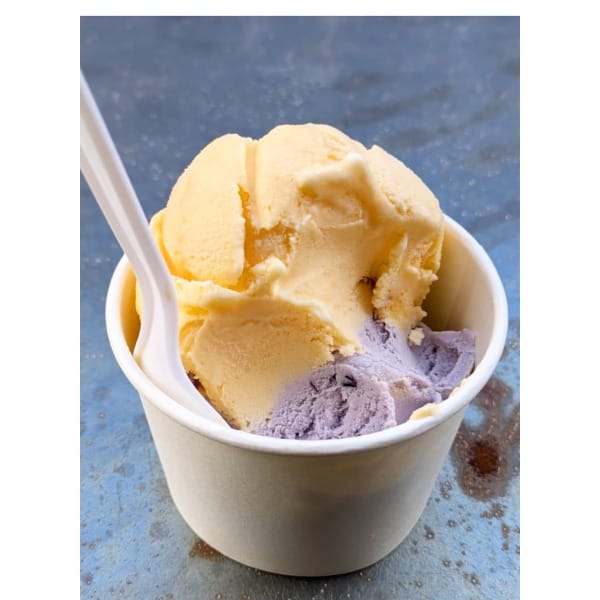
- A cup of Mona Lisa, a lavender, blueberry and Louisiana citrus cream cheese ice cream ice cream from Sweet Saint in the French Quarter, bought as a salve after I'd sat by the Mississippi and bewilderingly cried for an hour, listening to the same four songs on repeat. The next day I came down with a vile virus, then croup which answered the question of why I'd been feeling so low. I mean, I was in my favourite city, with my friends, in the sun. Nothing to feel sorry about at all. And I rarely cry anyway. So when I felt well enough to leave my house and kiss lots of people again in this most affectionate of cities without infecting people with a disease that risked transforming them into a barking seal, I returned to Sweet Saint to try their satsuma, sorghum syrup and butterscotch sherbet and it was amazing. (Sweet Saint is my favourite ice cream joint in the city and lord knows, I've tried most of them.)
- A muddy green pumpkin seed oil ice cream from Gelato Patisserie Giannakis in Poros, Kefalonia, which I didn’t expect to like very much—because it sounded so virtuous—yet did; and, two summers ago at Chishuru in London, an artfully plated fonio ice cream with carob custard and a fancy peanut praline and coconut crisp 'hat', like something you’d see at a wedding.
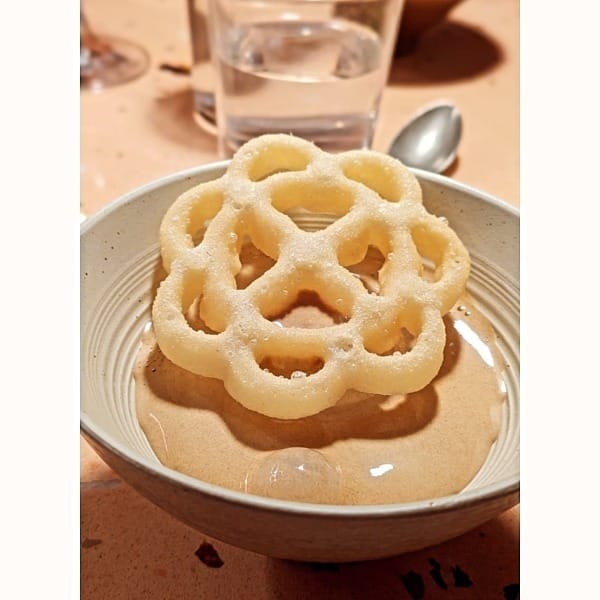
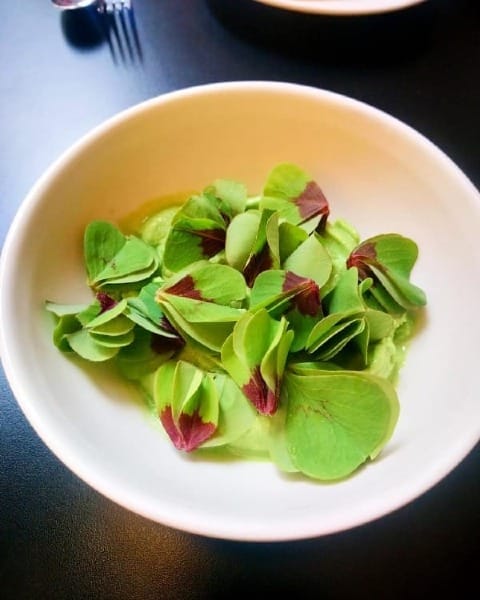
- I still think about the pale green sorrel ice cream, hidden beneath a blanket of sorrel leaves, that I ate at Flor, a much-missed restaurant in London. How, I wondered, had they preserved the colour of sorrel—a leaf notorious for turning to brown sludge once cooked? “A quick hot infusion, followed by an immediate cooling,” came the reply. I felt a bit like Ermintrude the Cow, sitting there munching on leaves, but it was fun.
Anyway, back to that Reddit thread and its many weird and deeply local flavours of ice cream. I posted a link to it on Bluesky which yielded yet more examples. Whether they are ‘synthetic’ or ‘real’ or not, is to my mind, beside the point. ‘Otter’s Paw’ stood out (explained as vanilla ice cream loaded with cocoa-coated pecans and thick Denali caramel swirls according to this Bluesky account). Clearly one does not need to eat otter to know it does not actually taste like one!
I love the idea of 'Uncle Joe's Mintball flavour’ made with the eponymous candy from Wigan, Maryland's Old Bay-flavoured ice cream (I think this would work!), ‘Superman’ (a swirl of red, 'Blue Moon', and yellow ice cream whose exact flavour profile varies from state to state), and the vividly blue ‘Smurf flavour’ fondly remembered from Italian holidays long ago. (Apparently in the US, the fruity flavour 'Blue Moon' is sometimes known as 'Smurf'.) I would buy pear drop or barley sugar-flavoured ice cream in a heartbeat.
I'm particularly captivated by Canada's 'Tiger Tail' a dramatically striped mix of black licorice and orange ice cream which I have spotted in American stores but (weirdly for me) not tried despite my love of licorice ice cream in all its hi-lo permutations; Nebraska's enchantingly rustic-sounding 'Butter Brickle' (chocolate-covered buttered toffee crunch folded into a vanilla cream base); and the 'Maple Creemee' from Vermont which, at its simplest, is a tall, swirled blend of maple syrup and cream. As is so often the case, it is the name as much as the flavour that seduces.
So.. what might the UK's local/regional flavours be:
- Strawberry? This flavour feels charmingly English, made with berries that are smaller, softer, and more fragrant than their imported counterparts. Its association with English summers ( you know what I mean...cricket teas, the sound of willow bats on balls, village fetes, spinsters on bikes cycling to Evensong...) irks me somewhat, in my mind edging uncomfortably close to the sort of litmus test of Britishness championed by people like Norman Tebbit. And strawberry ice cream feels distinctly French even though one of the first references to it was at a banquet in 1744 where Thomas Bladen, the governor of Maryland, served frozen strawberries and ice cream. I'm probably thinking of those tiny frais du bois berries which are ineffably, chicly Francais.
- Vanilla is a classic for a reason. Whether made with pod-infused fresh cream, sugar, and eggs, or from more economical ingredients with added flavouring, the vanilla plant, actually an orchid, is anything but basic; its history is complex and fascinating. If you're going to equate sex with vanilla, it'd involve major levels of kink (not shaming anyone for that, either!).
- I tend to think of hokey pokey as British, although it is now far more closely associated with New Zealand. Honeycomb-speckled ice cream is popular here, though. Brown bread ice cream, meanwhile, is an 18th-century European creation, originating in France before swiftly gaining popularity in the UK.
- Soy sauce–flavoured ice cream reflects centuries of immigration to the UK from countries such as China melding beautifully with caramel, honey, and cream. Rum raisin, a flavour with Sicilian roots, crossed the Atlantic to become hugely popular in 1930s America but for me Caribbean rum—and its producers—come to mind whenever I eat it. Lots of squidgy raisins well-macerated in rich dark rum folded into vanilla ice cream.... heaven.
- Chai ice cream is now fairly common here, and on Bluesky, Kavita Favelle suggested gulab jamun, jalebi, rasmalai, or kheer (rice or vermicelli pudding) ice creams representing the UK's large South Asian community
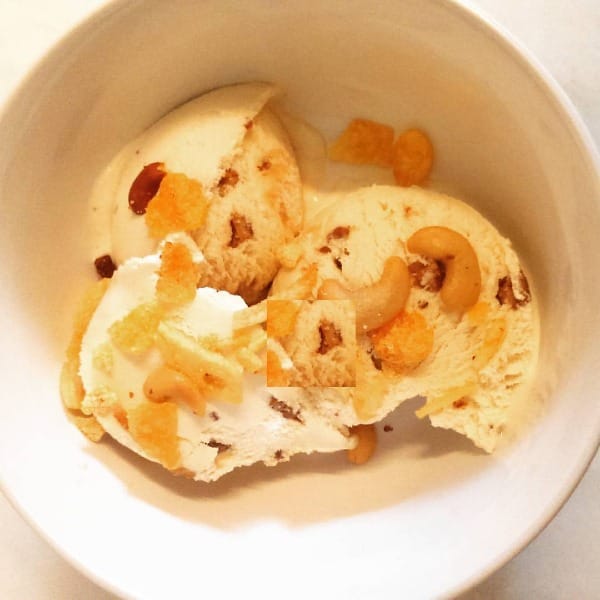
- Clotted cream ice cream from the West Country is luxurious, dense, and faintly caramelised, reflecting the region’s deep dairy heritage. The methodology isn't unique to this part of the world; in countries such as Greece, Turkey, Iran, and Afghanistan, kaymak—made from water buffalo milk—is popular. Clotted cream is very similar. I love watching videos of kaymak being made, they're elite ASMR.
- Further north, forced British rhubarb’s spry, sweet-sharpness seems almost to defy the dark forcing sheds in which it is grown, while the mellow sweetness of raspberries appears to improve the farther north they are cultivated. In Scotland, the raspberry reaches its apotheosis: many of the varieties still grown today were developed in Invergowrie so I love the idea of ice cream layered with oats, whisky, and raspberries, cranachan-style, flavoured with Irn Bru or mixed with crushed Tunnocks bars. Shortbread's delicate flavour and texture might not translate to ice cream as a flavour but it is perfect served with and you could apply the principles of brown bread ice cream to Butteries, Farls, Fatty Cutties, and Black Bun. And today I learned there's a Welshcake ice cream!
- Elderflower appears briefly in early summer, delicate and floral; blackcurrant arrives later, deep and almost wine-like, recalling fruit once marketed as the epitome of health to those of us who grew up drinking Ribena. Or blackberries, apples and pears, bullace, damsons, and hazelnuts. Even more unusual flavours—lavender, honey, or gooseberry are natural extensions of the countryside itself, where foraging, allotments and smallholdings help keep people fed. These flavours do fall victim to Ye Olden Times-itis though; blessed are the ice cream makers who don't fall into this trap. And everything is in season somewhere I remind myself as I give into the urge to buy asparagus from Peru. Friends from the Malaysian diaspora eagerly await durian season via durian mochi sold at their local international store and although I have been told mango kulfi is best made with canned pulp, I long to try it made using freshly picked fruits.
- Northern Ireland's 'Yellowman' is used in Maud's Honey Bear ice cream described as "a rich vanilla ice cream with chunks of yellowman through it. There are many imposters using honeycomb, but they don’t have the burnt sugar toffee taste and texture of old school yellowman," ShezzaT tells me, via Bluesky. (I'm a bit perturbed by its name but cannot find much info regarding its origins.) Paper 'pokes' of Yellowman used to be served with dulse (seaweed) at the Auld Lammas Fair in Co Antrim; northern Ireland's version of salted caramel, maybe?
Another Bluesky thread about regional ice cream flavour ideas.
The most Southern ice cream ever?
Bird’s Eye has a recipe for garden pea ice cream with bacon wafers; I guess it qualifies.
Dr Annie Gray shows us how to make cucumber ice cream and I love her Insta post about asparagus-shaped ice cream molds. I know I would detest asparagus ice cream.
Tasha Marks on the history of ice cream for the British Museum.

My favourite chapter in Ruby Tandoh’s book All Consuming: Why we eat the way we eat now relates the history of Viennetta setting it against modern ice cream culture. It’s worth buying her book for this alone.
Rachel Cooke on her passion for ice cream, brown bread flavour in particular.
Where do ice cream sundaes come from? Ithaca? Wisconsin begs to differ.
Some great books solely about ice cream or that include essential knowledge. Links go to my Bookshop.Org page where I earn a tiny commission from any sales. As per usual, many of these can be ordered from your local library if you're lucky enough to have one.
Hello, My Name is Ice Cream by Dana Cree
The Perfect Scoop by David Lebovitz
Ice Creams, Sorbets and Gelati: The Definitive Guide by Caroline Weir and Robin Weir
Malai: Frozen Desserts Inspired by South Asian Flavors by Pooja Bavishi
Mexican Ice Cream: Beloved Recipes and Stories by Fany Gerson
On Food and Cooking: The Science and Lore of the Kitchen by Harold McGee
Ice Cream: A Global History by Laura B. Weiss
Sundae Best: History of Soda Fountains by Anne Cooper Funderburg
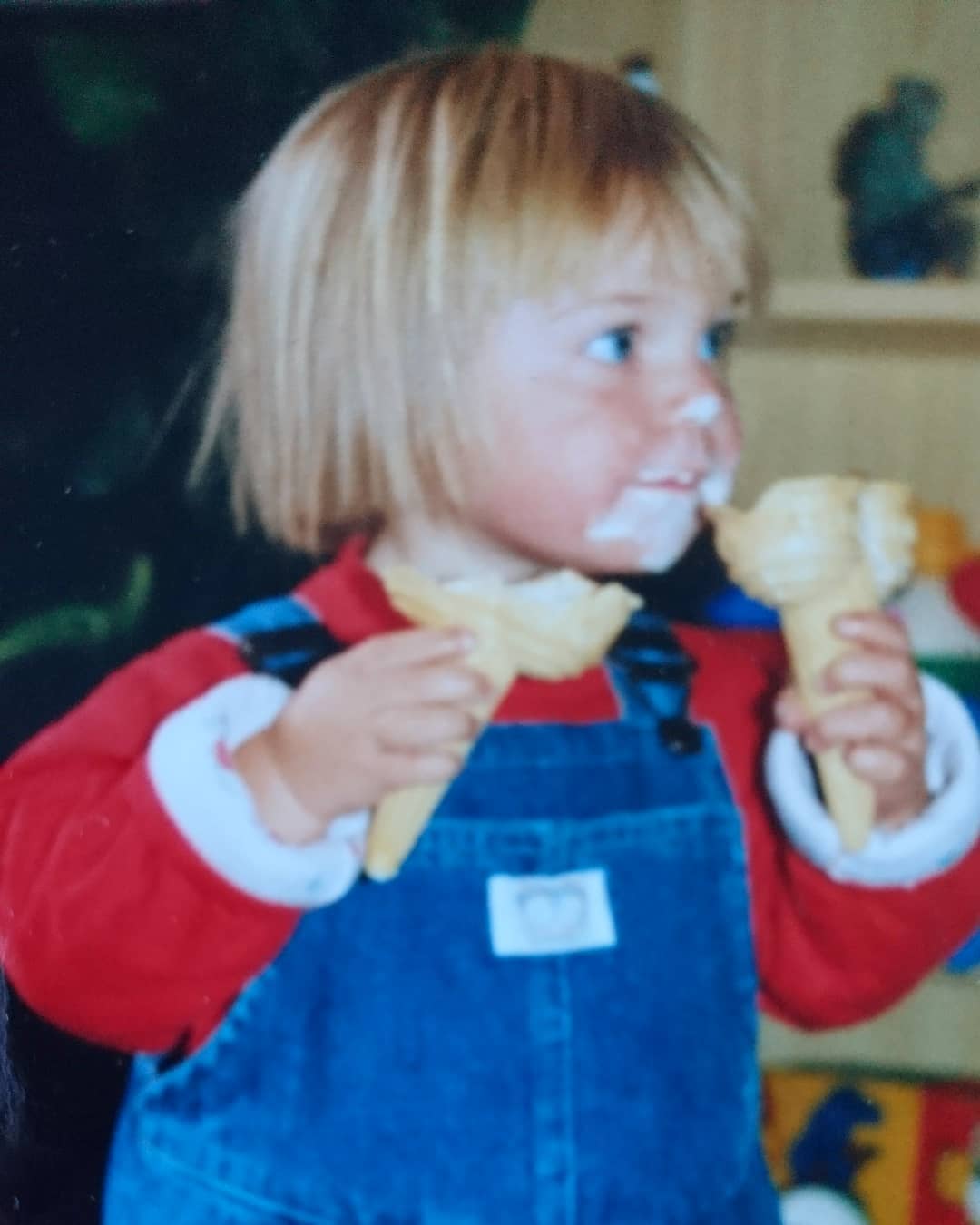
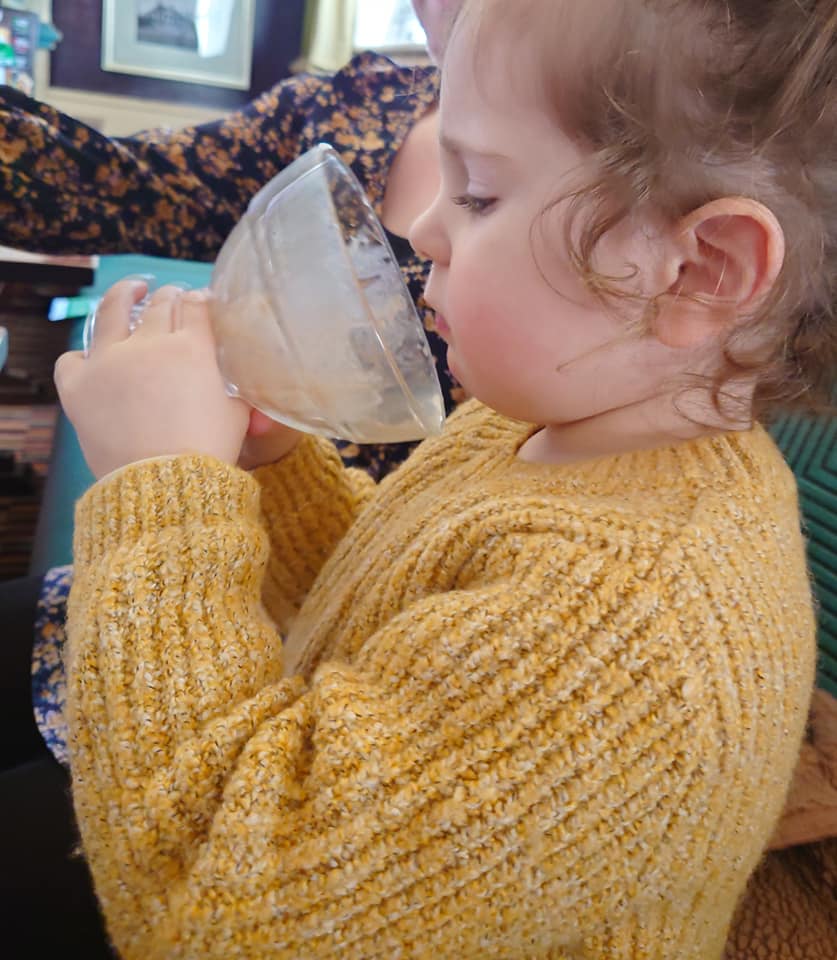
A love of ice cream runs in the family. L, my daughter, R my granddaughter via daughter 2.