JapanEasy Kitchen by Tim Anderson: a review

Japanese culture is often flattened, fetishised and stereotyped by the media. This is profoundly annoying. Chef and food writer Tim Anderson takes the opposite approach, engaging with Japan and its food with depth, context, and humility. Wisconsin-born Anderson studied Japanese food culture at university and lived in Tokyo for two years and now lives in London with his family where for nearly six years he owned and ran the much-missed Nanban, a Japanese-influenced restaurant in Brixton. He presents Japanese cuisine as dynamic, adaptable, and evolving, highlighting regional diversity, and the way professional and domestic Japanese cooks draw on influences from all over the world. Anderson is also diligent in crediting sources meaning his books serve as cultural primers for readers seeking context beyond their own traditions. They are a great example of culinary genealogy, reinterpreting and expanding existing knowledge, as if he is adding new branches to a family tree. I have learned a great deal from his work.
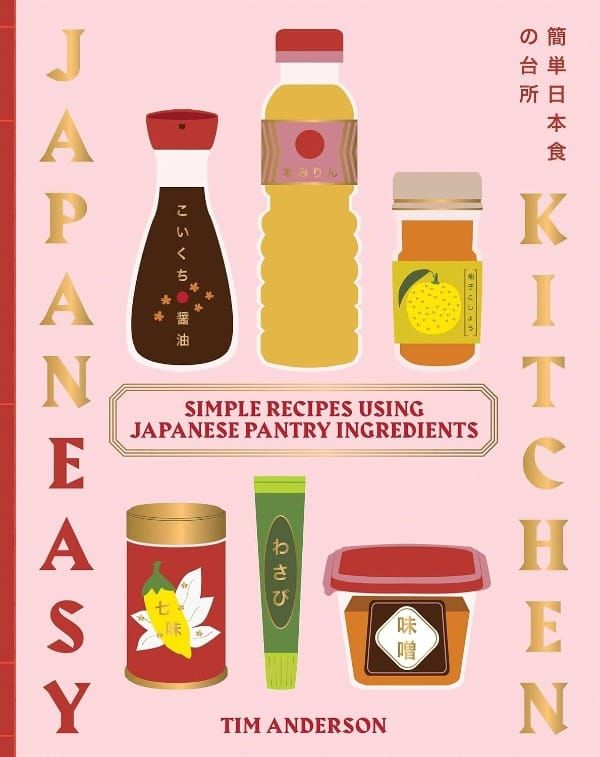
Japaneasy Kitchen: Simple Recipes Using Japanese Pantry Ingredients is Anderson's eighth cookbook, designed by Evi-O Studio and filled with Patricia Niven's stellar photographs. While each of Anderson’s books can stand alone in terms of what they offer skills and knowledge-wise, together they feel like an ongoing conversation with readers about his own journey towards a deeper understanding of Japanese culture. He blends personal experience and research with real élan (one wonders what the Japanese equivalent of that word might be), positioning himself as a natural guide who translates rather than claims authority in a warm, approachable and frequently funny way. Anderson takes his subject seriously but never himself. He doesn't lecture or hector. I don't get the impression he needs to get in The Last Word.
The introduction to JapanEasy begins with a capitalised subheading: "THIS IS NOT A JAPANESE COOKBOOK. I MEAN IT IS...BUT MOSTLY IT ISN'T" followed by an explanation of what exactly he means: this book focuses on Japanese ingredients and flavours, rather than traditional (canonical) Japanese dishes whilst respecting and teaching technique. Anderson argues that Japanese ingredients need not be confined to one cuisine; used thoughtfully, they can transform a wide range of cooking. He is also candid about perspective, noting that his recipes are filtered through his own experience as an American (and, as he jokes, “reluctantly British”) cook. Even when striving for accuracy, he recognises that his work remains an interpretation. It's Japanese food refracted through his own lens. But Anderson's experience has been hard won over time so JapanEasy feels like an intuitively experiential development. He's earned the right to play around a bit, marrying Japanese ingredients and culinary techniques with non-canonical recipes. Think of JapanEasy as a Japanese culinary workbook, he advises.
Structurally, recipes are organised into nine sections, each centred on a key Japanese pantry staple—kombu and katsuobushi, miso, soy sauce, sake, mirin and rice vinegar, rice and noodles, tofu, citrus, curry roux, and beverages. Each chapter begins with an essay on history and usage, alongside practical shopping advice (including candid discussion of different brands). Vegan recipes are clearly marked, and Anderson highlights personal favourites throughout. The book concludes with “The Library of Condiments,” a particularly valuable appendix of foundational and flexible sauces, categorized into dips and dressings, marinades and brines, glazes and pan sauces, and soups, seasoning and broths. This section justifies the book's cover price alone. Some highlights: a Sour Plum and Shiso Dressing (my favourite); Salted Leek Relish; Vegan Japanese Mayo; a useful pickling brine made with rice vinegar and a recipe to make your own sushi vinegar; a clever Vegan Broccoli Miso Pesto; Shichimi, Sansho and Satsuma Chilli Oil; quick Noodle Soup Broth Concentrate made with just four ingredients; and Miso-Mochi Vegan 'Cheese' Sauce.
In 'Kombu and Katsobuoshi' Anderson offers us inventive uses for leftover dashi ingredients, which are repurposed into furikake seasoning and then used in dishes such as his Spent Dashi Furikake Salt and Pepper Calamari- so clever! There are playful hybrids like Carrot and Kombu Salad (his take on French Carottes râpées), and a focaccia flavoured with furikake. In the 'miso' chapter, red miso is used in a luscious ox cheek stew; and the coinage 'Misostrone' (made with pancetta) comes via his friend, Fumio Tanga, owner of Okonomiyaki pop-up Sho Foo Doh. There's 'Three Ways with Miso Soup Packets' (used to season roast potatoes, risotto, and tuna pasta), and a (genius!) Wafu Rarebit richly flavoured with Tonkatsu sauce, miso, wasabi and sake.
"But as much as I love a new and novel sauce, I always come home to Kikkoman in the end. Maybe it's the Wisconsonian in me," he writes in the introduction to the chapter on soy sauce, guiding us through its many interations. This is incredibly reassuring, particularly if you don't have easy access to a variety of Japanese brands. Beginning with a recipe for Scallop and Bacon 'Rumaki', a pseudo-Asian recipe once-beloved of Tiki bars in the USA, we're then treated to recipes including Teriyaki Egg Burgers inspired by McDonald's fast food menus in Japan and a Soy Sauce Guiness Cake made pokey with the addition of Shichimi. The marriage of stout and soy is intuitive; they are remarkably similar in flavour, he says.
Anderson's explanations of flavour, function, and form are so strong. He breaks down the roles of key ingredients: sake contributes umami, sweetness and subtle acidity; mirin softens and rounds salty flavours; and rice vinegar adds twangy fermented brightness. He describes sake as "like liquid sourdough bread", delineating the difference between cooking sake and how best to use it (apparently its alcohol helps reduce fishy and meaty smells, tenderises meat and strengthens pectin, helping vegetables and fruit retain their shape during cooking). There's practical guidance, from choosing the right noodles to understanding the difference between Chinese and Japanese tofu, demystifying Japanese cooking without oversimplifying it.
“The carb space”—his rice and noodle section—is (again) rich in shopping advice, augmented with a warning to use the right noodle for the job, a lesson he learned after mistakenly using soba in yakisoba because “soba” became a blanket term for noodles during the Edo period. “Japanese cooking job one: learn to cook rice,” he writes in the headnotes to his tried-and-tested method. Recipes include a Mussel, Wakame and Asparagus Rice Soup that uses both cooked and uncooked rice; a brilliant (and funny) “Cornish Pasty Rice” with swede, minced beef, mirin, soy sauce, ginger and kombu (swede really does suit Japanese flavours); and Soba with Ham, Egg, Spinach and Crispy Comté, inspired by his observation that “French and Japanese food cultures have several commonalities: a respect for craft, an appreciation of terroir, a superiority complex—and buckwheat.” In 'Tofu' I was drawn to Anderson's Chilli Cheese-Crusted Tofu Gyoza, a golden-crusted cheesy wheel described as"a cheat" that uses ready-made frozen tofu gyoza (a DIY recipe for the latter is in his book, Vegan JapanEasy). And his 'Tofumisu' was created for his dairy, milk and (some) nuts-allergic son, flavoured with sweet white miso.
If you're new to ponzu, yuzu and yuzu kosho, think about their flavour profiles, he advises, and use them instead of lemon, lime, grapefruit etc. Recipes include a dreamy No-Churn Yuzu-Peach Ice Cream; Fennel, Chicory and Orange Salad with Yuzu-Honey Vinaigrette; his Watermelon and Avocado Sunomono, a sharp-sweet-vinegary dressed 'salad' (he calls watermelons "big, pink cucumbers" which made me laugh); and crusty bread stuffed with smoked mackerel in a wasabi and ponzu dressing.
A chapter on curry roux opens with an imagined trip back to Japan in 1868, when the Meiji Restoration saw rapid westernisation, industrialisation and imperial expansion; his chance to witness the birth of modern Japanese food culture when Japan began adapting foreign cuisines, giving rise to dishes such as ramen, tonkatsu, shokupan and karē raisu (Japanese curry rice), the latter introduced by the British via India.
Today, he notes, packaged curry roux is as ubiquitous as rice or dashi powder, even reappearing in the UK in dishes like Wagamama’s katsu curry (not a type of curry, he points out, but Japanese curry topped with a fried cutlet—katsu simply means “cutlet”). He offers his opinion on different brands—sometimes updated on his Instagram—along with practical advice on adjusting viscosity and layering flavour, since curry roux is often customised with additional seasonings or thinned and thickened as needed. The recipes are inventive: a Katsu Curry Parmo riff on the Teesside classic, served with fukujinzuke or pickled ginger; a glossy Lamb Bāgu, with curry roux enriched with port and miso to pour over spiced lamb patties; and Sweet and Spicy Chicken Wings, where grated curry roux is blended with honey, sriracha, soy sauce and lime juice to form a sticky, punchy glaze.
“Tea and Other Beverages" sees Anderson reflecting on matcha’s global popularity, which he finds slightly paradoxical given that its preparation requires skill and specialised equipment. Rooted in what he calls "the restrained, meditative aesthetics associated with the tea practices of Sen no Rikyū", its transformation in the West into a ubiquitous flavour-of-the-month is striking. Still, he embraces both high and low culture, arguing that matcha’s spread—from high-end patisserie cheesecake to high-street frappuccinos—simply reflects its “bright, bitter, bracing” ability to lift other flavours.
With an ongoing global matcha shortage, he encourages readers to explore other Japanese drinks: green teas, genmaicha (with roasted rice), mugicha (roasted barley), Ramune (a lemonade whose bottle is sealed with a marble stopper), and umeshu (plum liqueur). All matcha-based recipes, he notes, can be adapted using other teas. Highlights include a Triple Tea Parfait layered with genmaicha–coconut ice cream, microwave hojicha sponge and matcha-honey syrup; a Matcha Midori Grasshopper, inspired by a drink from his Wisconsin hometown; and a trio of Ramune-based cocktails. These include one with rye (a “salaryman’s midlife crisis in a glass”), another with lager and citrus, and “Dimples,” a mix of fruit juice, grenadine and a maraschino cherry—named after the indentations on a Ramune bottle that keep its marble stopper in place.
Other standouts:
I loved the pale elegance of his Crab and Nori Omelette; a Chinese-Japanese Fried Aubergine with Tangy Leek Sauce; the Old-Fashioned cocktail made with Hon-Mirin that showcases its sherry-like flavours; and his Passion Fruit Ponzu Ceviche.
Here's a Bookshop.org link to buy JapanEasy. I earn a tiny commission from each sale.