Spring list: part two


Here's part two of my cookbook roundup. Part one can be read here.
Notes:
I have added details of each book (where possible) to my Bookshop.Org store page. This is an affiliate link that earns me a (very) small commission from each sale.
A cookbook habit can be expensive, but most (if not all of these) can be ordered from your local library if you're fortunate enough to have one. And keep an eye out for excerpted recipes and extracts in newspapers and magazines around the time of (the book of your choice's) publication.
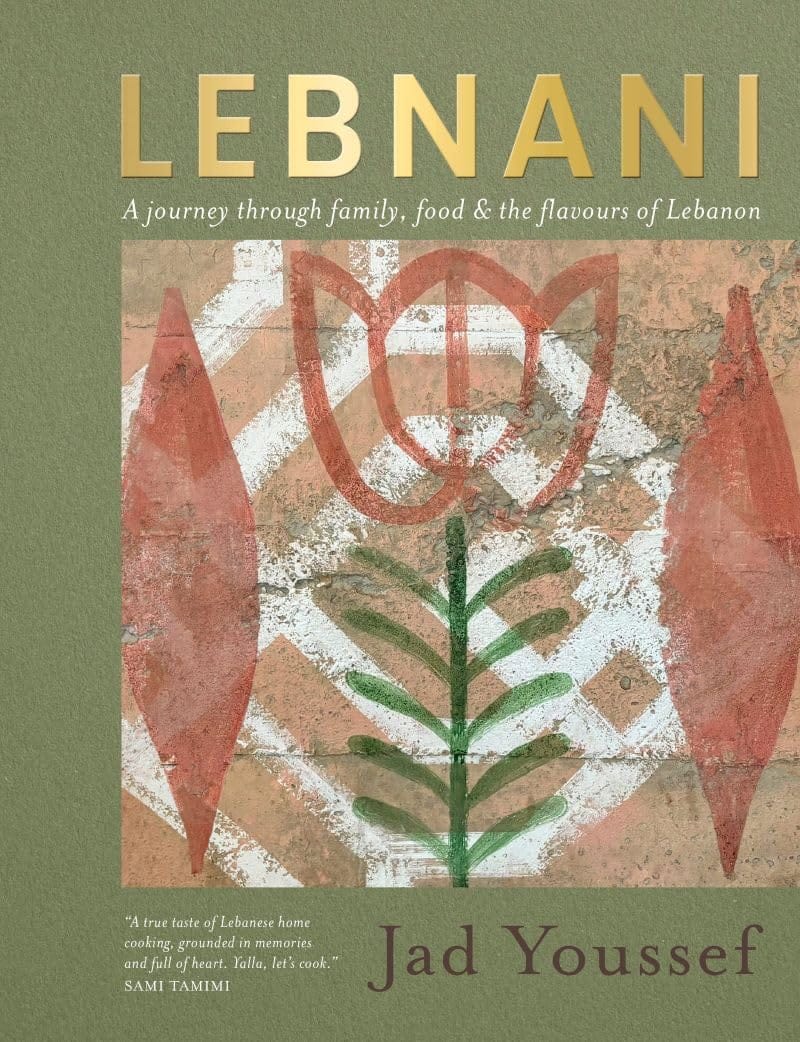
Lebnani: A journey through family, food & the flavour of Lebanon by Jad Youssef (Meze Publishing)
Jad Youssef, chef-proprietor of Lebani, a restaurant in Surrey, was born just two years after the start of the civil war in Lebanon; his entire childhood "unfolded against the backdrop of a country at war," he writes in the introduction to Lebnani, his first cookbook. "Despite falling bombs and regular power cuts, the question in our home every morning remained the same: ‘What shall we eat today?" he says. "Food was our way of creating normality, of keeping family close, of finding joy.... Whatever was taking place outside our door, the kitchen remained our sanctuary."
This eponymous cookbook, his first, is an invitation to look beyond headlines that focus almost exclusively on conflict and instead recognise the “great beauty, warmth and resilience” of Lebanon and its people.
Lebanese cooking, he says, is “not complicated” but “deeply intentional.” Food shapes the rhythm of daily life: “Every dish carried memories, stories and, often, silent acts of love.” The recipes in this cookbook are not adapted to Western trends. They are unalloyed tradition — recipes for dishes cooked by his family in their own kitchens — accompanied by larder staples (pickles, relishes and sauces), a useful glossary, and a short guide to sourcing ingredients.
Recipes are preceded by a beautifully observed series of essays titled Our Dishes, which explore core rituals and ingredients. Youssef remembers a childhood task: carrying a small dish of oil-drizzled cheese to the baker to be scattered over rounds of dough waiting to be baked. Mana’eesh za’atar — Lebanon’s iconic flatbread — is described as “the land in your hands.” He writes about Khadija’s tabbouleh, hummus (“simple, honest, ours”) and falafel, before introducing térwi’aa — breakfast — as a cornerstone of Lebanese life. Recipes include Balila (a soothing chickpea broth with olive oil and lemon), E’jjeh (herby egg fritters), and Mana’eesh Za’atar flavoured with wild thyme, sumac and sesame.
His introduction to mezze is particularly lovely. “Not all mezze made it to the restaurants. Some never even made it past the front door. These are the quiet dishes… the heartbeat of the table.” There’s a comforting Shorbet Djej, chicken noodle soup flavoured with baharat; Fraké Nayyé; Kibbeh in its many forms; and Ma’aalé — fried vegetables served with tarator and pomegranate. Very young fava beans are cooked with garlic, coriander and lemon in Ful Maa’la Akhdar. A grilled halloumi, watermelon and mint salad (Salatet Halloum w Battikh) makes my mouth water.
Mezze is beautiful, but tabkha — “a cooked dish” — is, Youssef says, the heart of everyday Lebanese home cooking. Standouts include Freekeh b’Lahmé (smoky green wheat with lamb, sultanas and nuts), and Kafta b’Sayniyeh layered with potatoes and tomatoes. Lebanese rice is studded with golden vermicelli, served with oxtail and chickpeas or used to stuff chard leaves simmered in lemony broth. In Moghrabieh, chewy semolina pearls are paired with spiced chicken and onions in a caraway-scented sauce.
Barbecuing (mashawi) is a way of life and earns its own chapter. Lamb features heavily, but there’s also grilled fish with tarator and smoky aubergine salad, and tiger prawns brushed with chilli sauce. An excellent essay on building the perfect Lebanese sandwich accompanies recipes like Sandwichét Shawarma Djej — the chicken sandwich Youssef and his siblings would buy when “things felt a little safer to do so” — and Sandwichét Ma’aalé, a sandwich of fried cauliflower and aubergine that reminds him of morning market trips with his mother.
Youssef’s father owned a pastry shop, so it’s no surprise that Hélweyét — sweet things — receive loving attention.
There’s Osmaliyeh b’Tine (baked kataifi layered with orange blossom–scented ashta and poached figs), folded pancakes stuffed with cinnamon-scented walnuts, bowls of chilled Mhalabieh topped with grenadine and pistachios, and Knefe b’Jibneh soaked in a syrup perfumed with rose and orange blossom—the dish that will always remind him of his father.
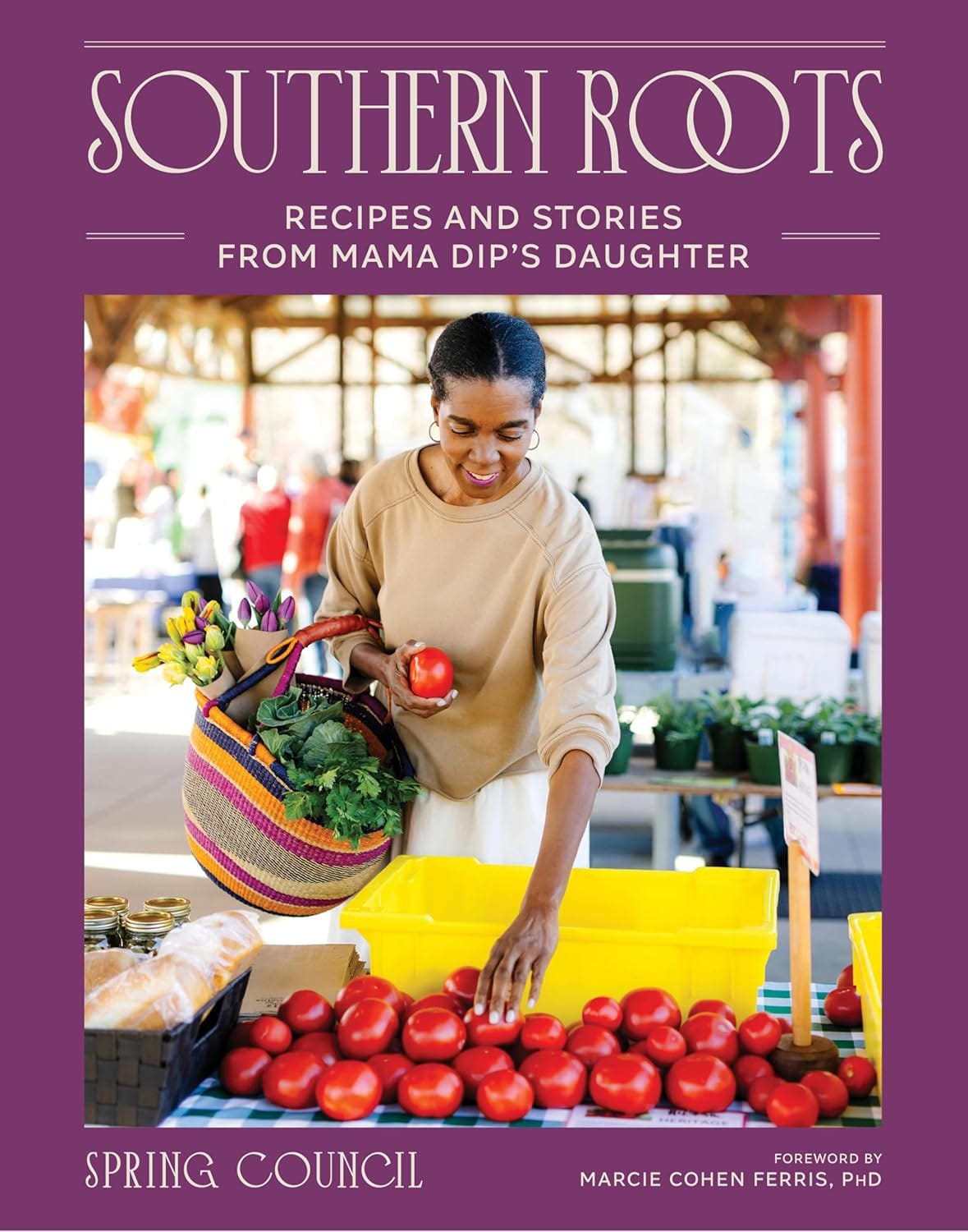
Southern Roots: Recipes and Stories from Mama Dip's Daughter by Anita "Spring" Council (W.W. Norton & Co)
Anita Spring Council is the daughter of Mildred "Mama Dip" Council, whose Mama Dip’s Kitchen, a restaurant in Chapel Hill, North Carolina, remains one of my favourite dining experiences in the American South. Anita now co-owns the restaurant with her sisters, and this is her first cookbook, packed with over 100 recipes, interspersed with stories grounded in multigenerational community and culinary legacy. "This kitchen built a legacy of warmth, comfort, and the most delicious food," says Council on her Instagram account.
The introduction tells the story of her family and describes their—and her own—culinary philosophy. "Although Southern country cooking is a family tradition, curiosity has allowed me to preserve and evolve within my culinary heritage," she writes. "At the heart of these recipes is the history of my ancestors, culminating in a diversity of flavors planted here in the South. While developing the recipes in this book, I embraced traditional Southern cooking and created dishes that emerged from my expanded food terroir, and I held my childhood food memories near..." Southerners may love aspic, but this isn’t preservation for its own sake. These recipes are frequently innovative and fun, plus they deploy techniques, ingredients and traditions from diasporic communities.
The recipes are a blend of traditional (Pimiento Cheese Biscuits; Grits Casserole with Shrimp Gravy) and modern takes on beloved classics (Fried Green Tomato Parmesan; Goat Cheese Pound Cake; Sweet Potato Pecan Pie) with menu suggestions at the end of the book. They use volume measurements. Some of my favourites: Mortadella Corn Bread Dressing and the bacon-wrapped 'BLT' crackers topped with lettuce and tomato; a Cream of Turnip Soup with Crispy Greens and a dish of Creamed Turnip and Potato to serve with lamb; and Bruleed Corn Pudding inspired by the Fresh Corn Casserole in her mother's cookbook, Mama Dip's Kitchen. A lovely essay about serendipitous culinary mishaps prefaces a recipe for Chicken and Drop Dumplings; her Pan-Fried Lamb Chops combine Italian Parmigiano with a classic Southern crumb coating, and she adds juicy boiled shrimp to a deeply savoury potato salad. Walnuts are boiled, coated with sugar and fried, then seasoned with orange peel and black pepper, something her mother used to do at Christmas. Sweet potatoes are used for Hot Cross Buns, Swiss chard and chickpeas go into a Bread and Butter Pudding, and Cucumber and Jalapeño Sandwiches are served at teatime. The dessert section is as glorious as you'd expect: there's a towering layered Coconut Cake with Sour Cream Frosting; a dish of Banana Pudding with Chocolate Meringue inspired by her mother's version; Chocolate Bread Pudding with Candied Bacon; Lemon Chess Pie with Cardamom; and a homespun Orange Cream Punch made from orange sherbert and ginger ale-doused vanilla ice cream. The Southern tradition of pouring salted peanuts into a bottle of Coke goes up a notch with the addition of rum. I think this might be my favourite way to boost electrolytes on a hot summer's day, with or without the rum.
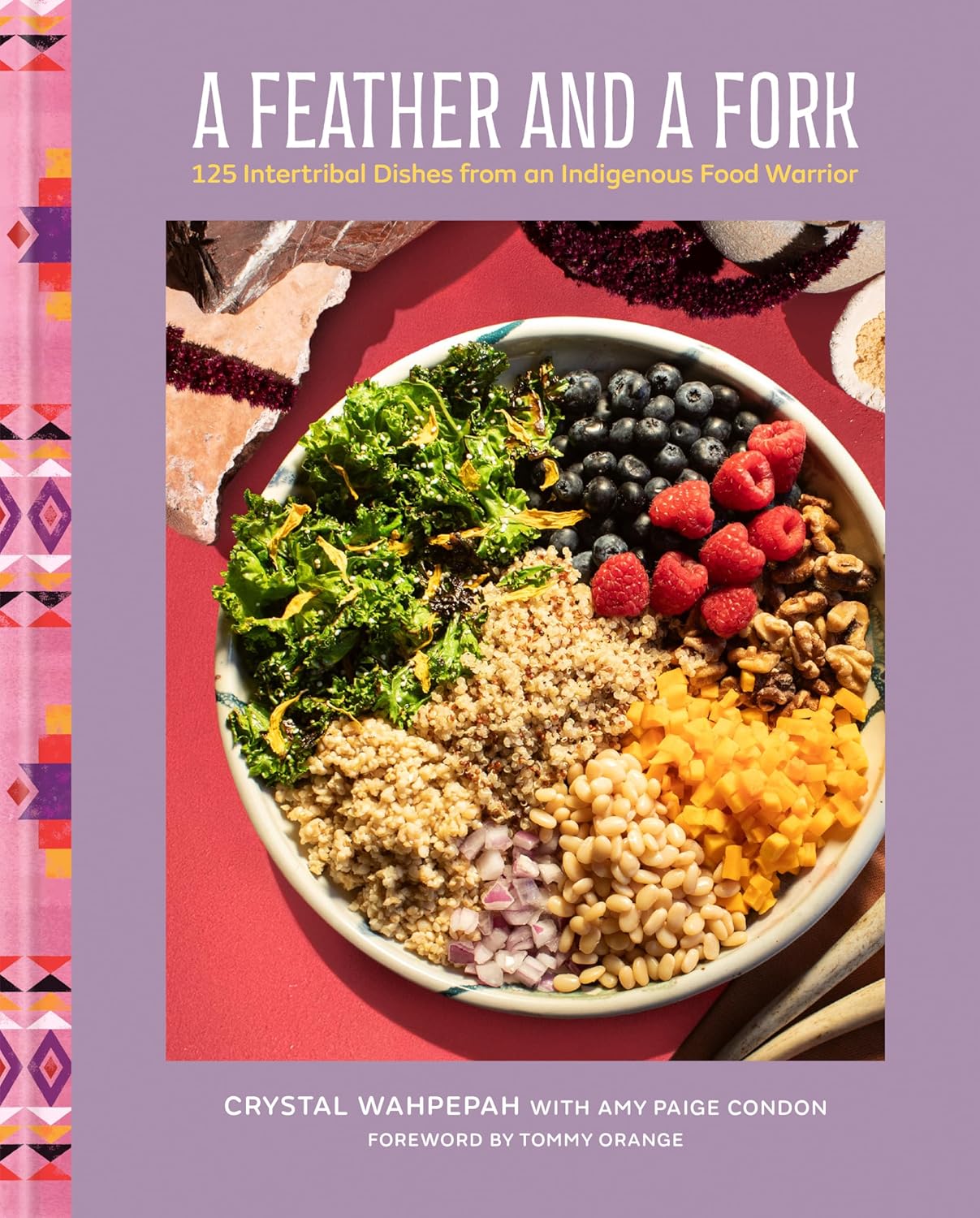
A Feather and a Fork: 125 Intertribal Dishes from an Indigenous Food Warrior by Crystal Wahpepah (Rodale Books)
"The experience of being Native is not defined by the imagery of a vanishing people but by the vibrant, complex lives lived within contemporary society, navigating not only Native American identity but also the challenges of urban life," writes Chef
Crystal Wahpepah in the introduction to this, her first book. "It is the same with our food."
Wahpepah, a member of the Kickapoo Nation of Oklahoma, is the first Native woman to own a restaurant in Northern California. She grew up in and around the urban Indigenous communities of Oakland, where more than eighteen thousand Native people live. Her restaurant, Wahpepah’s Kitchen, “reclaims Native foodways and connects guests to the vibrant, nourishing bounty of Native foods and intertribal cultures.” Jars of heirloom seeds—harvested by other tribes and given as gifts—line its yellow shelves.
She writes of the trauma experienced by people whose identities are bound to the land when that land is abused: “It is like seeing a member of your family beaten, bruised, and broken.” Wahpepah seeks to transform this generational trauma into strength, connection, and regeneration through the sharing of food.
This, her first cookbook, is part of that process. It aims to help readers understand their culinary heritage through modern interpretations of the precolonial Native American diet, using fresh ingredients grown with low-intervention methods and eschewing commercial agricultural practices that fail to steward the land responsibly. An important element is the inclusion of a glossary with Kiikaapoa and English translations. “At Wahpepah’s Kitchen, every seasonal dish’s name is listed on the menu with both its Kiikaapoa and English translations,” she explains—a practice repeated in her cookbook—“so that you can see and sound out the lilting musicality of my tribe’s native tongue.”
Recipes are interspersed with short essays rich in historical and cultural insight, augmented with evidence-based guidance on health benefits. A comprehensive resource guide appears at the end. Measurements are given in volume.
Chapters are organised by ingredient, beginning with the Three Sisters—beans, corn, and squash—which are traditionally grown together according to the fundamental tenets of Native regenerative agriculture. Her Neowi Ototeemetiaki Otaatopakooni (Three Sisters Veggie Bowl) began in her home kitchen and is now a signature dish at Wahpepah’s Kitchen, drizzled with two house-made oils: Chili and Maple (recipes included). A Neowi Ototeemetiaki Chaakisii Pahkwesikani (Three Sisters Cake) “sits at the intersection of cornbread and tea cake in terms of texture” and is served with maple syrup boiled down to a butter-like consistency. Dried hominy appears in Takwahaani Peneewa Nepoopii, a pozole-style soup with wild turkey, and in Takwahaani Siisiipe, where it is fried in duck fat. Squash is smoked for tostadas with green chile salsa (Pahteewi Aapikooni Aaskipakiyaaki Chipitiini), or tossed with amaranth and agave vinaigrette in Aapikooni Otaatopakooni Thiithapaakwamisi, a warm autumn salad.
The section on foraging brims with brightness, drawing on tubers, seeds, roots, and berries. Meekateethichik Miinaki Otaatopakooni, a blackberry salad, is dressed with sage oil (“Miinaki—‘berries’—to me are the most beautiful food,” she writes), and the same fruit appears in a smoked salmon salad with puffed amaranth (Pahteewi Chaakisii Memeethaki Miinaki). Blueberries are stewed with turkey in Miinaki Peneewa Nepoopii, while corn grit cakes are split and filled with maple cream and wild strawberries in Oteehiminani Chaakisii Pahkwesikani. There is even a clever take on Floating Islands, served in a dark, lush berry sauce.
Root vegetables feature prominently: turnips are tossed with beets and apples in the strikingly colourful slaw Mesiimina, and in Ihskopihpeniiya Pahteewi Peeskoneiihi Mekohi Ithakahaakanaapowi, sweet potatoes are roasted, scented with smoked hibiscus flowers, and folded into taquitos with tomatillo salsa and hibiscus sauce. Elsewhere, there are recipes for pumpkin seed mole, morels fried in a duck egg and cornmeal batter, and wild onion soup.
Meat, she explains, was never central to the Native diet; it was “wild, local, and minimal.” American bison, venison, wild turkey, small game, fish, and seafood were hunted, with deer particularly prized by the Kickapoo. Wahpepah shares her much-loved recipe for Miinaki Misiikwaa (Blueberry Bison Meatballs with Blueberry Sauce), made with crunchy blue cornmeal—venison and other lean meats make practical substitutes for those without access to bison—alongside little venison kebabs (Peesekithi’a Katoowakimina-Thiithapaakwamisi) served with chokeberry-agave sauce. (Chokeberry is known as Aronia in the UK and can be bought dried.) There's a whole trout served with berry compote (Chaakisii Memeethaki Miinaki), and Chaakisii Memeethaki Otaatopakooni Piipihskiihi sees salmon and watercress sandwiched between thick slices of cornbread. Seaweed corn cakes made with sustainably harvested packaged nori are another highlight, as are small patties of wild rice, apples, and cranberries (Manoomini Chaakisii Pahkwesikani).
As one might expect, the section on ancient grains is especially compelling—though these ingredients appear throughout the book. Standouts include Mayan Chaakaneti Miikieni Okweeminaki Chaakisii Pahkwesikani (Mayan Chocolate Amaranth Cake) and honey-sweetened Acorn Muffins (Mehtekomini Chaakisii Pahkwesikani). Acorn flour is sold online and in health stores in North America and the UK.
Historically, Native communities have been particularly vulnerable to addiction and substance abuse, so Wahpepah does not serve alcohol at Wahpepah’s Kitchen, nor does it appear in this cookbook. Instead, she writes about beverages as “good medicine,” offering recipes for teas and tinctures “brewed by people across time and place to instil good health, good mood, and, in many cases, good conversation.” Mehskopwaakaa, a prickly pear sparkler, is a standout, as are her teas infused with blackberry and sage (Meekateethichik Miinaki Otaatopakwi Ochiikaapowi) or pineapple and elderberry (Miinaki Ochiikaapowi).
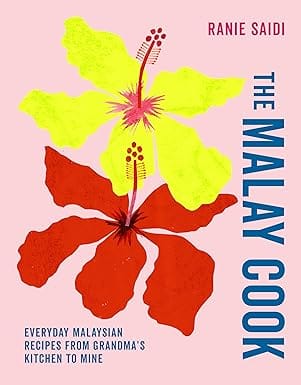
The Malay Cook: Everyday Malaysian Recipes from Grandma’s Kitchen to Mine by Ranie Saidi (Ryland Peters & Small)
The introduction to Ranie Saidi’s cookbook is a beautiful, moving tribute to his grandmother and to Malaysia, where she lived and ran a catering business. His earliest memories are of her cooking: he describes himself as “a child on a low stool, watching her, held safe in the heart of her kitchen and by the love that built me.” Together they would visit the wet market before stopping for breakfast, and at Eid the local community would gravitate towards their home, drawn by the promise of her Ayam Kenduri Kahwin (Matrimonial Chicken)—a dish Saidi later cooked at his own supper clubs in London.
His grandmother died in 2011, and her handwritten recipe book was stolen, forcing Saidi to painstakingly reconstruct her cooking through conversations with relatives, endless testing and retesting, and by seeking out as many Malaysian cooks and restaurants as he could. “Cooking is not just about repeating the past,” he writes. “It is a living language that carries the flavours of my heritage while embracing the rhythms of the country I now call home.” It is where memory and imagination meet. “In blending these worlds, both parts of my identity grow together. I no longer have to choose who I am. They exist as one, whole and real.”
From there, Saidi sets the table more broadly. He explores the concept of the Malay table, weaving together history, geopolitics, and the regional techniques and rituals that shape identity. He recalls how Londoners often assume all Asians eat with chopsticks, when in a Malay meal, “it’s still the hand that connects you to the food.” A Malay gulai, he explains, is culturally distinct from the colonial catch-all of “curry”, a term used to flatten “all Asian-spiced gravies” into one.
The chapters follow the layered way Malaysians eat, and include a comprehensive guide to ingredients. One highlight is his exploration of lemak manis, a coconut milk–based flavour profile he describes as a form of cultural memory- something I did not know. I love his ‘cheat’ recipe for pan-fried coconut butter, which sidesteps the more traditional method of toasting ground fresh coconut into a paste by using a store-bought block of coconut. His Malay Flavour Table—balancing sweet, salty, sour, creamy, spicy, nutty, aromatic and pungent elements—is a smartly practical tool for capturing the essence of each dish. Recipes are in metric and imperial.
Standout recipes include Cucur Kelapa Berempah (spiced coconut and tofu fritters with mango dip), Kerabu Kacang Rumpai Laut (seaweed and green bean salad), Pajeri Nenas (a sweet-sour spiced pineapple stew), Ikan Masak Tomato Jintan Manis (fish with tomato and cumin), Sambal Ikan Krim ( a creamy buff sambal with monkfish), the evocatively-named 'Summer Rain Rice' (Nasi Hujan Panas) cooked and eaten during monsoon season, Jem Rambutan and Laici (a rambutan-lychee jam) and a fabulous Pic Kacang Crumble Dengan Kastard Kelapa (peach and peanut crumble with coconut custard). But honestly, I’d happily cook—and eat—every single one.
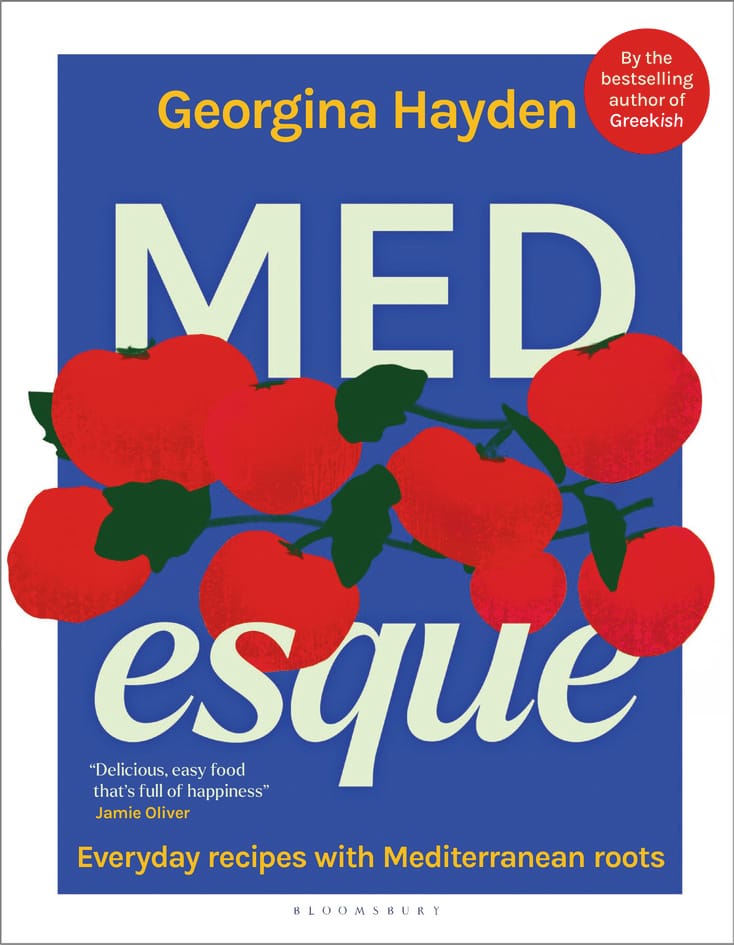
Medesque: Everyday Recipes with Mediterranean Roots by Georgina Hayden (Bloomsbury Publishing)
Georgina Hayden is one of my favourite writers and recipe developers, admired for her reassuring, friendly voice and reliably delicious, inventive food. I have never failed at one of her recipes. Her books are suffused with love for her family, expressed through photographs, recipe headnotes, and short essays. It’s clear how deeply she enjoys her work. Medesque is her fifth cookbook.
"The word ‘Mediterranean’ doesn’t just refer to a geographical location, after all, but to a way of life," she writes in the introduction. Nutritionists have long hailed "food hailing from the sunny Mediterranean coastline" as one of the healthiest, most balanced diets on the planet, she tells us, before commenting on the nebulous way this region (and its 'lifestyle') is defined and depicted: "In food terms, the word ‘Mediterranean’ is thrown around pretty liberally..." The Mediterranean Sea is bordered by 21 sovereign countries spanning Europe, Asia, and Africa, as well as several territories, so why do food writers confine themselves to Italy, Spain, France, and Greece when writing about 'The Mediterranean Diet'? Hayden avoids this pitfall. In her introduction, she explicitly draws our attention to communalities and differences in cooking and eating across all 21 countries before offering more than 110 recipes that reflectively marry their ingredients, techniques, flavours, and traditions.
The book’s structure is simple and practical, with recipes roughly organised by time of day or week (breakfast, weekday meals, weekends) or category (puddings, sides and salads, pasta) plus a few short essays. At the end, there's a double-page spread of menu suggestions, including two for vegans and vegetarians, and a list of stockists for harder-to-source ingredients. Hayden's recipes are inherently flexible and easy to mix and match, a quality that runs through all her cookbooks.
So, although the first chapter, “Starting Strong", offers lots of delicious things to eat for breakfast and brunch, many of them can be served at other times of the day as a main course, snack or pudding. Custardy Cinnamon Torrijas made with, ideally, “a slightly elderly farmhouse loaf”, a recipe for bowls of Brown Sugar Papara (feta, stale bread, brown sugar, and clotted cream), a Seeded Pear, Olive Oil and Yogurt Loaf (which she classes as a 'Breakfast Cake), and chocolatey Churros Dutch Babies are all multipurpose sweet things. The Apricot and Sobrasada Focaccia can accompany any meal, and Hayden's bright Halloumi, Coriander and Chilli Omelette Pita Wraps would also make a great supper.
Weekday cooking is particularly well catered to—something Hayden, who has a young family, excels at. I like the sound of her Easy Tomatoey Greek Greens cooked in oil, yiahni-style (eat them with fresh bread and capers, she advises); a Spanish-style Creamy Lentil, Potato and Garlic Stew; and a series of pasta recipes introduced by a short essay titled “Pasta Party,” in which she traces the prevalence and popularity of pasta not only around the Med but pretty much everywhere else. Hayden’s One-Pan ’Nduja, Pepper and Three Cheese Lasagne sounds irresistible, as do a Provence-influenced Pissaladière Pasta (plus advice on cooking onions from a Mount Athos priest!) and her Herby Gilda Butter, inspired by the flavours of the classic Basque pintxo of skewered pickled peppers, anchovies and olives to be served with steak, chops or even prawns.
As you can tell, the transcultural influences are impressive: an elegant Spanish-inflected Sea Bass with Grapes and Ajo Blanco; One-Pan Mbakbaka (slow-cooked beef with caraway pasta) from Libya; a Barbajuan Swiss Chard, Leek and Ricotta Tart inspired by Monégasque deep-fried pastries; and Trampó, the Mallorcan tomato salad. Hayden’s Grilled Chicory with Caramel Raisins and Almonds celebrates Italian agrodolce; she serves chickpeas on toast, Tunisian-style; and Malta offers a lighter alternative to potatoes Dauphinoise in her Spiced Patata Fil-Forn.
Finally, there is the sweet section, divided into “Bakes,” “Creamy,” “Ices”, and “Drinks.” From the baking chapter, I was drawn to her Apple and Sesame Frangipane Galette, and little Date, Walnut and Dark Chocolate Maamoul Cookies, based on a recipe given to Hayden by Elham, a Jordanian cook. Both precede a short essay describing Hayden’s adoration of creamy set puddings made with egg, semolina or cornflour, depending on their place of origin, one example being a Cypriot-Lebanese Mango Muhallabieh (which can be veganised). The Basil Viennetta, liberally drizzled with dark chocolate, sounds wonderful, as does her Honey and Fennel Frozen Greek Yoghurt, frosted glasses of Visinada (“Greek Cherryade”) and warming Spanish-style Horchata de Chufa made with tiger nuts.
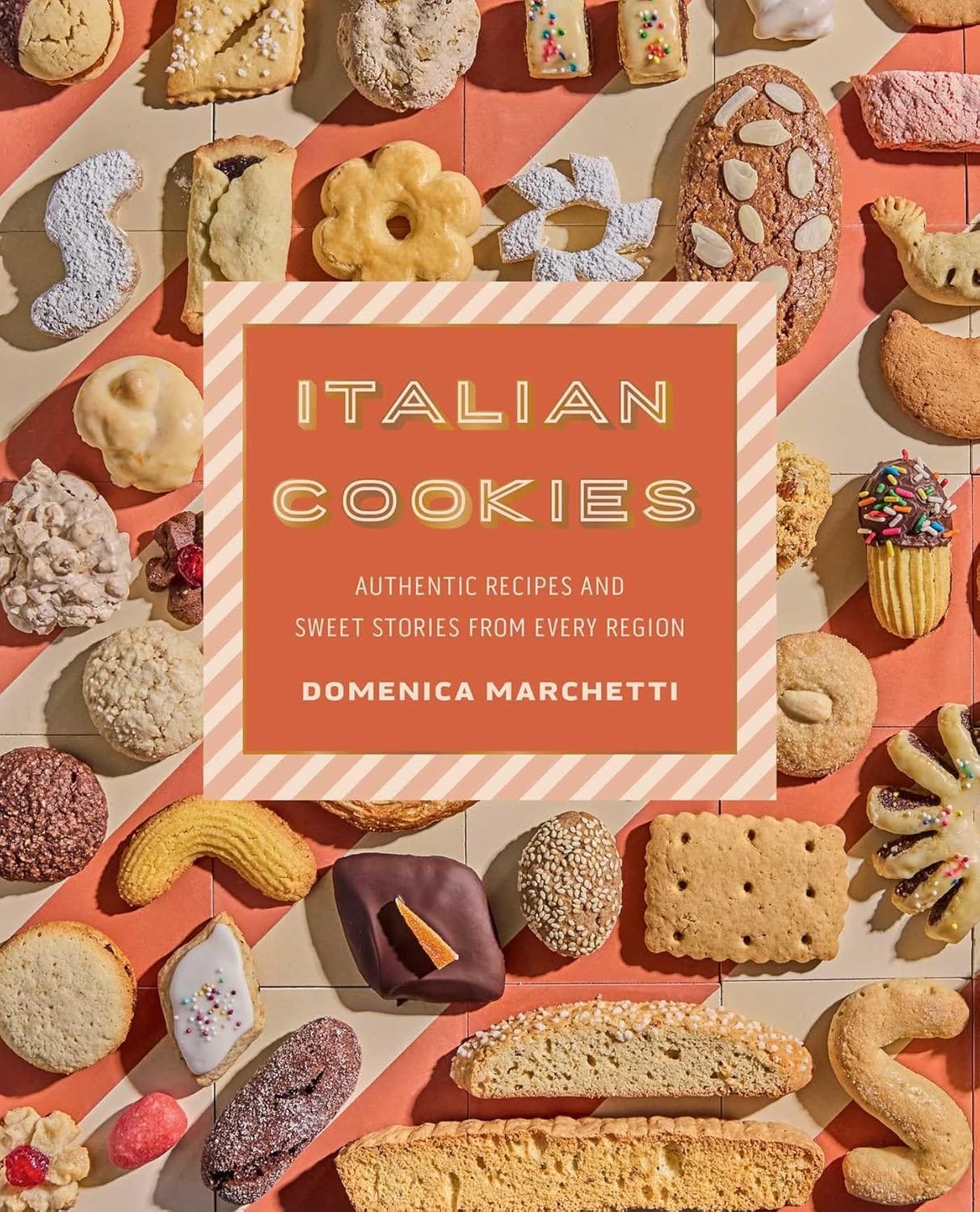
Italian Cookies: Authentic Recipes and Sweet Stories from Every Region by Domenica Marchetti (Gibbs Smith)
"It started with a bag of cookies," writes Domenica Marchetti in her introduction to her wonderfully written treatise on regional Italian cookies. Looking for something to offer guests on one of her Genoan food tours, she didn't have the time to do anything other than rush into a small bakery and grab a cellophane-wrapped packet of "pretty but plain-looking flower-shaped butter cookies", which turned out to be the best butter cookies she'd ever eaten. After examining the packaging for its place of manufacture, she found herself a few days later driving to the village of Torriglia in the hills north of Genoa, where canestrelletti di Torriglia have been made for centuries. "End of a sweet story? I thought so, too, but it was just the beginning," she writes. A suggestion by a friend led her to Gavi in Piedmont and amaretti di Gavi. In Gavi, she was told to go to nearby Voltaggio, where the amaretti were even better. "And it wasn’t just amaretti," she adds. "There were Brutti ma Buoni from Borgomanero, Nocciolini di Chivasso, Imperialine di Omegna, Krumiri di Casale Monferrato, and more. Looking at these places on a map, it became clear to me that a swath of northern Italy is populated by cookie towns. Much like Italy’s cheeses—Asiago, Gorgonzola, and Taleggio, for example—I discovered that many of Italy’s cookies have a place of origin."
Marchetti's background is in news reporting; she has a graduate degree in journalism from Columbia University so combines rigorous research with finely-wrought storytelling, making this a must-have guide for Italophiles, even those of us with hundreds of books on the subject (including Marchetti's previous books; she's the author of at least eight more, including 'Biscotti', a personal favourite). Her reporter's clarity of thought extends to the book's structure: she begins with a section on essential ingredients, equipment and baking techniques before dividing Italy into four regions (North, Central, South, Islands) and finishing with a chapter on embellishments (essential pastes, fillings, spice blends and preserves) followed by sources and a decent bibliography. Recipes are offered in volume and metric.
I learned about the three basic doughs common to Italian biscuits (and some of the exceptions to this rule, i.e. Meringhe di Assisi, Tiliccas from Sardinia, and Biscotti), how the choice of fat can be regionally coded, and the different ways fruits and nuts are used (in pastes, liqueurs, candied, cooked or otherwise preserved, and fresh). The techniques are comprehensively described and explained (her pizelle troubleshooting tips are particularly appreciated). Evocative illustrations by Daniela Braco and atmospheric photographs by Lauren Volo make this book a joy to read.
And the recipes! From Liguria, there are Baci di Alassio (starry chocolate-hazelnut kisses) and those gorgeous sunny-golden Canestrelletti di Torriglia (with an accompanying essay about their hometown). There's a recipe for a bright bowl of tricolour Favette Triestine from Friuli-Venezia Giulia and Occhi di Bue (similar to Linzer cookies) from Trentino-Alto Adige, and a giant crumbly almond-studded Sbrisolona from Lombardy and Emilia-Romagna. Anise is popular: we see it used to flavour the Tuscan wafers Brigidini di Lamporecchio, Anicinus Anicine from Sardinia and Sicily, the Pugliese Occhi di Santa Lucia, and Campania's Anginetti (cookie knots). In Abruzzo, Marchetti tries Ciambelline al Vino, usually made by 'eye' and dipped in local red wine, and the very pretty Celli Ripieni, shaped like birds and filled with Scrucchjata, a thick white grape jam. Cagliari in Sardinia has its own amaretti cookies (puffy, crackle-topped, tender within) and she includes a recipe for Biscotti del Gattopardo, which features in the 1958 novel Il Gattopardo, set in western Sicily.
Some more books to look out for:
- Nathan Outlaw on Fish: A Seafood Handbook by Nathan Outlaw (April, Kyle Books)
- JapanEasy Kitchen: Simple Recipes Using Japanese Pantry Ingredients by Tim Anderson (April, Quadrille Publishing Ltd)
- Madaq: Simple Everyday Recipes with the Flavours of Morocco by Nargisse Benkabbou (April, Quadrille Publishing Ltd)
- The Book of Coffee: A Philosophy by Julian Baggini and James Hoffman (April, Mitchell Beazley)
- Mexican Soul: A New Style of Cooking by Santiago Lastra (April, Quadrille Publishing Ltd)
- The Lao Kitchen: Lao'd Flavors and Stories Told Through Family Recipes by Saeng Douangdara and Vilaysack Kulap (April, Random House Inc)
- The Art of Korean Cooking by Onjium (April, Thames & Hudson)
- The Pickled City: The Story of New York Pickles by Paul van Ravestein and Monique Mulder (April, Chronicle Books)
- Modern Australian Baking: Sweet, Savoury, Seasonal & Native by Christopher Thé (April, Hardie Grant Books)
- Aloha Veggies: Veg-Forward Recipes Celebrating the Flavors of Hawai'i Hardcover by Alana Kysar (April, Random House Inc)
- Sáng: Recipes from a Korean Family Table by Kenny Son (April, Hardie Grant Books)
- Vitamina T: Your Daily Dose of Tacos, Tortas, Tamales, and More Mexican Street Food Classics by Jorge Gaviria, Fermín Núñez and Allegra Ben-Amotz (April, Clarkson Potter)
- The Indonesian Vegetarian Table by Petty Pandean-Elliott (April, Phaidon Press)
- God Is a Pickle: Recipes and Stories for Preserving the Seasons - A Culinary Journey Through the Czech Republic by Sárka Otevřel Camrdová and Marek Bartos (April. Gestalten)